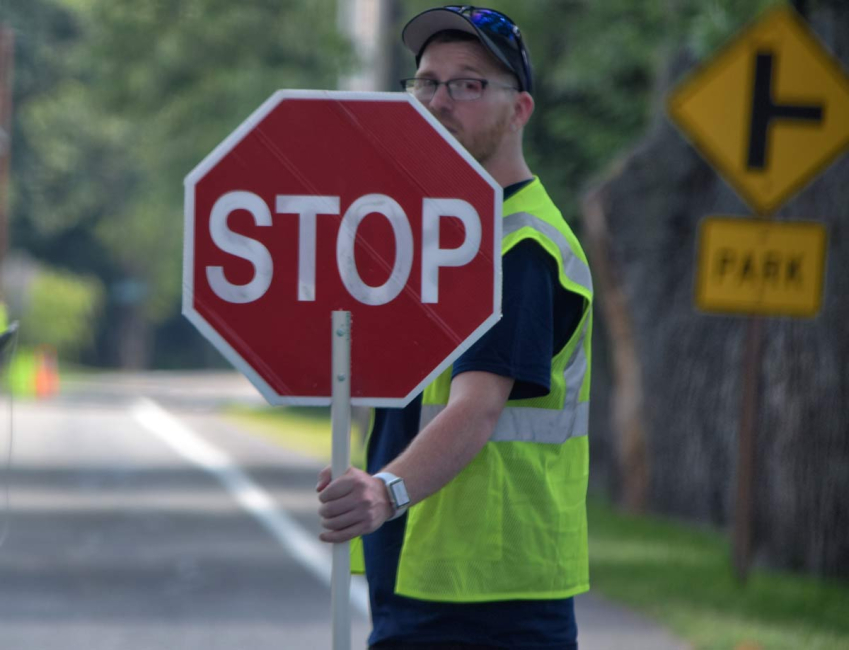
When it comes to road work, setting up cones and waving a flag might seem like the simplest part of the job, but it’s also one of the most dangerous. As a highway superintendent, you already know that your team’s safety and the traveling public’s safety depends on well-run work zones. And the person on the flag line is often the first (and only) thing separating your crew from oncoming traffic.
Yet too often, flagging gets treated as an afterthought. Maybe a new hire is thrown out there to “help with traffic” without any real training. Maybe an experienced crew member thinks they know the drill but hasn’t taken a refresher course in years. That’s a recipe for risk.
 Flaggers control the entire work zone.
Poor flagging can cause accidents, driver confusion, or even expose your crew to unsafe conditions. A properly trained flagger knows how to communicate clearly and consistently to keep everyone safe.
They are the face of your department.
To motorists, the flagger is the highway department. A professional, calm, and visible flagger projects a sense of order, and reduces the chance of road rage or unsafe behavior by impatient drivers.
Work zones are dangerous by nature.
Every year, flaggers are injured or killed in work zones across the country. High-speed traffic, distracted drivers, and limited sight distances create hazards even in the best conditions. Training helps flaggers know where to stand, how to stay alert, and what to do in an emergency.
It’s a legal and liability issue.
In many states, flaggers must be certified through an approved training program. If an accident happens and it turns out your flagger wasn’t trained or certified, you and your town could face serious liability.
If your department doesn’t already have a formal flagger training policy, it’s time to implement one. Many DOTs and safety organizations offer inexpensive certification courses. Make sure everyone who might flag traffic, even for short-term or “quick” jobs, gets trained and refreshed regularly.
And remind your crew: Flagging isn’t a punishment or a rookie assignment. It’s a skilled job that deserves respect and careful attention.
At the end of the day, you want every member of your team going home safe, and you want the public to pass through your work zones without incident. Solid flagger training is one simple, essential way to help make that happen.
 Every road department has far too many roads and way too little money. The challenge isn't deciding whether roads need to be repaved, it's dec…
 Putting together a Job Safety Analysis binder from scratch sounds like one of those projects you tackle with good intentions, right up until you are t…
 If you have ever stood at the front of a room full of highway or public works crew members with a PowerPoint clicker in your hand, you already know th…
 If you have spent any time in public works, you already know that job titles can be about as consistent as spring potholes, meaning not very. One town…
 Rainy Days Are Safety Days: Why Every Highway Superintendent Should Keep a Training Binder Handy As every highway superintendent knows, no two days in…
 A survival guide for highway supers with frayed nerves and a half-empty coffee mug. The Anatomy of a Board-Induced Migraine Town boards are like aspha…