
If you have ever stood at the front of a room full of highway or public works crew members with a PowerPoint clicker in your hand, you already know the feeling, you are not just competing with short attention spans, you are competing with a lifetime of classroom fatigue. For many road workers, traditional classroom environments bring back memories of school settings where sitting still, listening quietly, and absorbing abstract information was never exactly their strong suit. These are hands-on professionals who fix culverts in the rain, run equipment with precision, and solve real-world problems on the fly, so asking them to sit under fluorescent lights and listen to a lecture can feel like putting a plow truck in park during a blizzard.
The root of the challenge is not a lack of intelligence or capability, it is a mismatch in learning styles. Many in the field learn best by doing, seeing, and interacting, not by listening to long explanations or reading slides full of text. When placed in a passive learning environment, their engagement drops fast. You can often see it happening in real time, chairs start shifting, arms cross, eyes drift to the clock, and suddenly the whole room looks like a group of third graders counting down to recess. It is not disrespect, it is simply disengagement.
Another factor is relevance. Road crews are practical by nature. If they do not immediately see how a topic applies to their daily work, their interest fades quickly. A generic safety lecture that feels disconnected from their actual job tasks will lose them in minutes. On the flip side, when training clearly ties into real risks they face, like working in traffic, trench safety, or equipment blind spots, attention tends to come back online.
So how do you keep a room full of hands-on workers engaged without resorting to bribery with donuts alone, although let’s be honest, that never hurts? The key is to break the traditional classroom mold and make the training feel more like the work they are used to.
Movement is one of the simplest and most effective tools. If you are standing still the entire time, you become part of the background noise. Move around the room, change positions, and bring the energy up a notch. Even better, get them moving. Ask questions, have them raise hands, stand up for quick demonstrations, or walk through a scenario. The more physically involved they are, the less likely they are to mentally check out.
Props are another game changer. Instead of talking about a piece of equipment or a hazard, bring something tangible into the room. A damaged hard hat, a worn-out sling, a traffic cone, or even a chunk of broken pipe can instantly shift attention. When people can see and touch what you are talking about, it becomes real. It also gives you something to point to besides a slide, which helps keep the focus off a monotonous screen.
Interaction is critical. Ask questions that require more than a yes or no answer. Encourage workers to share their own experiences, especially near misses or lessons learned. Not only does this keep them engaged, it also builds credibility because the training is no longer just coming from “the instructor,” it is coming from their peers. And let’s face it, a story from a coworker about something that almost went wrong will land a lot harder than a bullet point on a slide.
One of the most underrated tools in modern safety training is the use of short videos. A well-chosen clip from YouTube can do what a 15-minute explanation often cannot, grab attention instantly and show real-world situations in action. The key is to keep them short and relevant. A two or three minute video demonstrating a close call, a piece of equipment operation, or a safety failure can reset the room’s attention and reinforce your message without dragging things out. It also breaks up the rhythm of a single voice talking, which is often half the battle.
Variety is your best friend. The fastest way to lose a room is to do the same thing for too long. Mix it up, talk for a few minutes, show a video, ask a question, demonstrate something, then circle back to discussion. When the format keeps changing, attention tends to follow.
At the end of the day, the goal is not to turn road crews into classroom enthusiasts, that is probably not happening anytime soon. The goal is to meet them where they are, respect how they learn best, and deliver training in a way that sticks. Because when the training actually connects, it is not just about keeping their attention, it is about keeping them safe out there on the road, where it matters most.

 Every road department has far too many roads and way too little money. The challenge isn't deciding whether roads need to be repaved, it's dec…
 Putting together a Job Safety Analysis binder from scratch sounds like one of those projects you tackle with good intentions, right up until you are t…
 If you have ever stood at the front of a room full of highway or public works crew members with a PowerPoint clicker in your hand, you already know th…
 If you have spent any time in public works, you already know that job titles can be about as consistent as spring potholes, meaning not very. One town…
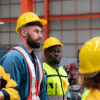 Rainy Days Are Safety Days: Why Every Highway Superintendent Should Keep a Training Binder Handy As every highway superintendent knows, no two days in…
 A survival guide for highway supers with frayed nerves and a half-empty coffee mug. The Anatomy of a Board-Induced Migraine Town boards are like aspha…