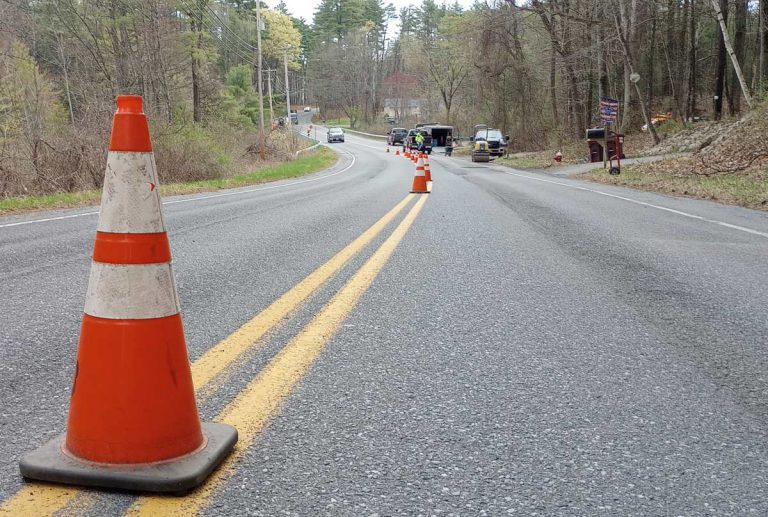
As a highway superintendent, you know your crews are under constant pressure to “just get it done.” A pothole needs patching. A tree limb needs removing. A catch basin needs a quick cleanout. And someone inevitably says, “We’ll be in and out in five minutes… no need to set up the whole work zone.”
Stop right there.
That’s exactly how accidents happen.
It doesn’t matter if it’s a five-minute job or a five-day one: proper work zone setup is non-negotiable.
Traffic doesn’t know your crew plans to be out of the way quickly. Drivers aren’t expecting a worker to dart into the shoulder, or a dump truck to be half in the travel lane. And if something goes wrong, it’s too late to wish the cones had been out.
Crews often skip setting up because they want to save time. Ironically, an accident or injury will shut the whole operation down far longer than setting out cones and signs ever would.
A “quick job” that ends in a crash or citation can tie up the crew for hours – or worse.
Setting up a proper work zone:
 alerts drivers to slow down
creates a safe buffer between workers and traffic
protects municipal liability (yes, lawyers will ask what safety measures were in place)
reinforces a culture of safety for your entire team
Every job deserves that protection. No exceptions.
As superintendent, it’s your responsibility to set the expectation: no work starts until the work zone is properly established. Period.
This also means providing the right equipment, cones, signs, flags, arrow boards, and making sure your crews are trained in basic traffic control principles.
Remind your team often: “If you have time to do the work, you have time to set the work zone.”
Next time someone says, “We’ll be done in five minutes,” answer with:
“Then it’ll only take five more to set it up safely.”
It’s a simple habit that can save lives, including those of your crew members.

 Every road department has far too many roads and way too little money. The challenge isn't deciding whether roads need to be repaved, it's dec…
 Putting together a Job Safety Analysis binder from scratch sounds like one of those projects you tackle with good intentions, right up until you are t…
 If you have ever stood at the front of a room full of highway or public works crew members with a PowerPoint clicker in your hand, you already know th…
 If you have spent any time in public works, you already know that job titles can be about as consistent as spring potholes, meaning not very. One town…
 Rainy Days Are Safety Days: Why Every Highway Superintendent Should Keep a Training Binder Handy As every highway superintendent knows, no two days in…
 A survival guide for highway supers with frayed nerves and a half-empty coffee mug. The Anatomy of a Board-Induced Migraine Town boards are like aspha…