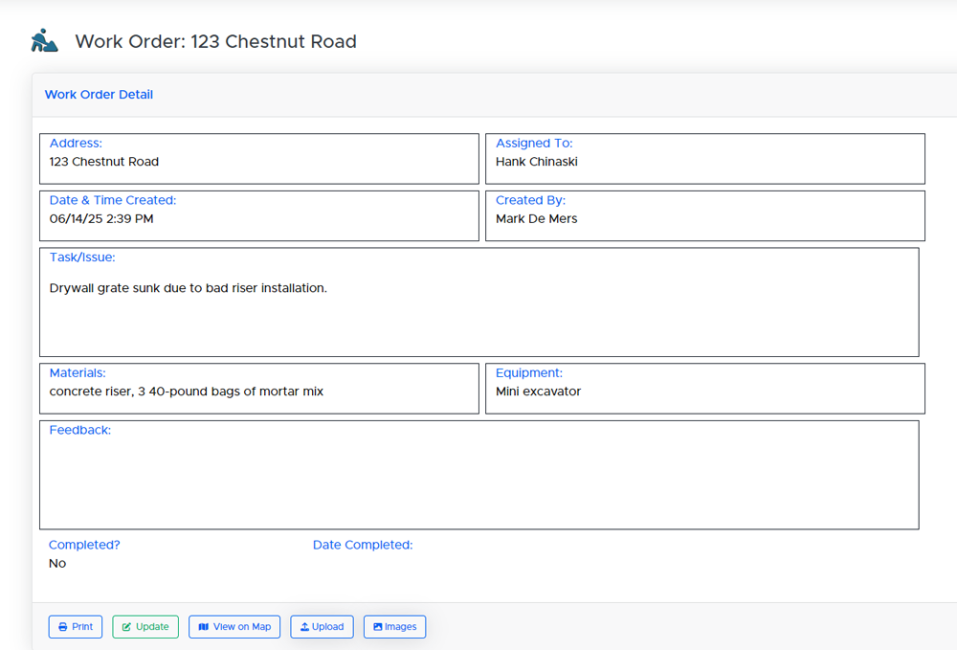
Let’s be honest. No one dreams of paperwork when they sign up to run a highway crew. But a good, simple work order can save a road supervisor from all kinds of headaches later on. Whether it’s a routine pothole patch or a full-day ditching job, having the right info on a work order helps with planning, accountability, and recordkeeping.
Here’s a breakdown of what you should include, and why it’s worth the extra few minutes to fill it out right.
Include the date the work is scheduled, the time it starts, and (if known) the estimated duration. This helps with crew assignments, overtime tracking, and looking back to see what happened on any given day.
Be specific. Use road names, intersections, house numbers, or utility poles. Whatever helps someone unfamiliar with the area find the site. GPS coordinates are even better if you’ve got the tools for it.
Keep it short and clear. Examples:
If you’re doing multiple tasks at one location, list them out so no steps get skipped.
List materials the crew should bring or expect to use. That might include stone, asphalt, cold patch, seed, pipe, signage, or cones. This helps the garage prep loads ahead of time and avoids wasted trips back for forgotten items.
Same idea. Note what equipment is expected to be used. Loader? Roller? Brush hog? Flagging setup? If something needs to be moved between barns or borrowed from another department, this gives you time to coordinate.
Write down the names of the employees expected on the job. You can always adjust in the morning, but this helps with timekeeping and accountability.
If you’re not going to be on site, list the lead worker or foreman who’ll be in charge. Make sure they know it. Include a cell number if the crew might need to reach someone for decisions.
Add anything out of the ordinary. Watch for low wires. Be mindful of a sensitive neighbor. Coordinate with the utility company. Avoid school bus times. These little details can make a big difference.
Because memories fade. Because jobs get interrupted. Because you might get a call six months from now asking, “When did we dig up that pipe?” If you have a tidy little folder or digital record of work orders, you’ll look like a genius.
It doesn’t need to be complicated. A clipboard with a fill-in-the-blank sheet works great. Better yet, if you’re using software, make sure it allows field crews to view and complete work orders easily.
A good work order is like a pre-game plan. It sets your crew up for success, keeps the office in the loop, and covers your tail when questions pop up. It’s five minutes well spent.
Simple highway department asset management solutions, such as Roadwurx, allow you to easily create, update, and print work orders for your crews.

 Every road department has far too many roads and way too little money. The challenge isn't deciding whether roads need to be repaved, it's dec…
 Putting together a Job Safety Analysis binder from scratch sounds like one of those projects you tackle with good intentions, right up until you are t…
 If you have ever stood at the front of a room full of highway or public works crew members with a PowerPoint clicker in your hand, you already know th…
 If you have spent any time in public works, you already know that job titles can be about as consistent as spring potholes, meaning not very. One town…
 Rainy Days Are Safety Days: Why Every Highway Superintendent Should Keep a Training Binder Handy As every highway superintendent knows, no two days in…
 A survival guide for highway supers with frayed nerves and a half-empty coffee mug. The Anatomy of a Board-Induced Migraine Town boards are like aspha…