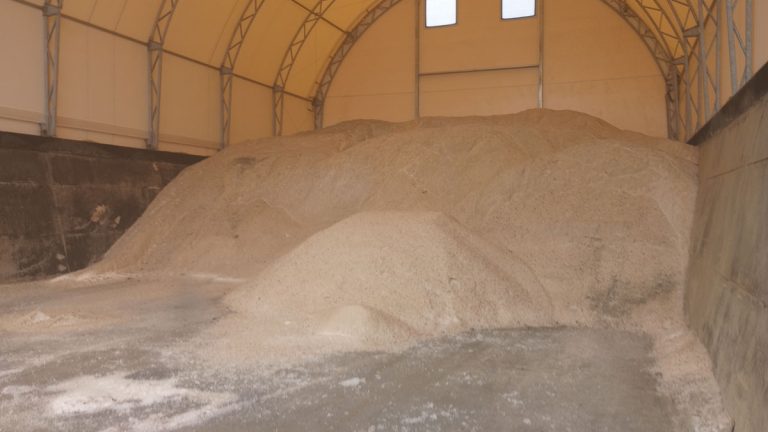
When the snow starts falling, rock salt (sodium chloride) is the go-to weapon for most highway departments trying to keep roads safe and passable. But like any tool, rock salt has its limits, and knowing when it stops being effective can save you time, money, and a lot of wasted effort.
Let’s break it down.
Rock salt works by lowering the freezing point of water. Instead of ice forming at 32°F (0°C), a brine created by salt can stay liquid at much lower temperatures, helping to break the bond between ice and pavement.
But the colder it gets, the less effective this process becomes, because the salt needs some moisture to make that brine. If it’s too cold, not enough melting occurs to keep the reaction going.
At 0°F (-18°C) and lower, salt is pretty much done. It won’t reliably melt ice unless traffic and sunlight help create just enough brine to make a difference, and that’s a long shot.
Here’s where it gets interesting. As the temperature drops, salt’s ability to melt ice takes a nosedive:
| Temperature (°F) | Pounds of ice melted per pound of salt |
|---|---|
| 30°F | ~46 lbs |
| 25°F | ~14 lbs |
| 20°F | ~8 lbs |
| 15°F | ~6 lbs |
| 10°F | ~4 lbs |
| 0°F | Less than 1 lb — practically ineffective |
As you can see, what works great at 30°F turns almost useless at 0°F. That’s why it’s critical to adjust your deicing strategy based on the forecast.

Rock salt is an affordable, reliable deicer, but only when used at the right temperatures. Understanding its limitations helps you make smart choices, avoid waste, and keep your roads safer through all kinds of winter weather.

 Every road department has far too many roads and way too little money. The challenge isn't deciding whether roads need to be repaved, it's dec…
 Putting together a Job Safety Analysis binder from scratch sounds like one of those projects you tackle with good intentions, right up until you are t…
 If you have ever stood at the front of a room full of highway or public works crew members with a PowerPoint clicker in your hand, you already know th…
 If you have spent any time in public works, you already know that job titles can be about as consistent as spring potholes, meaning not very. One town…
 Rainy Days Are Safety Days: Why Every Highway Superintendent Should Keep a Training Binder Handy As every highway superintendent knows, no two days in…
 A survival guide for highway supers with frayed nerves and a half-empty coffee mug. The Anatomy of a Board-Induced Migraine Town boards are like aspha…