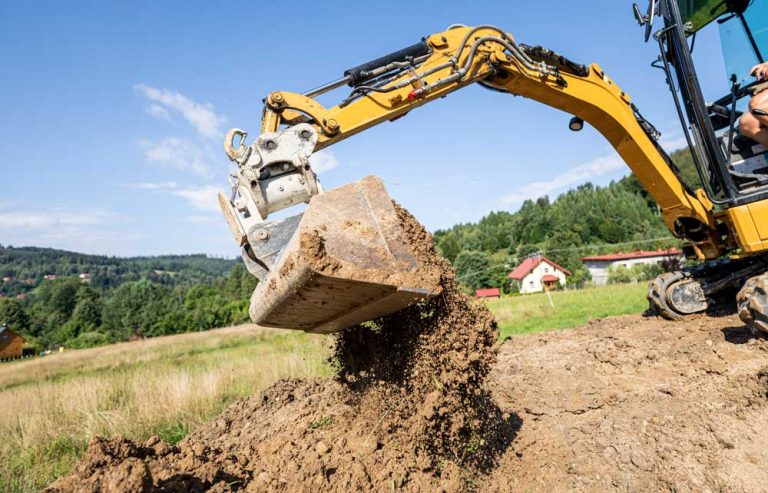
Let’s paint a picture: it’s a sunny Tuesday, your crew’s out on the shoulder with the backhoe, ready to dig. You’re swapping jokes, maybe arguing about where to get lunch, and then BOOM. You just turned a quiet ditch project into a fireworks show by hitting a gas line. Congratulations! You’ve now bought the town a new evacuation plan and yourself a mountain of paperwork.
Moral of the story? Always call Dig Safe.

Oh, have you? That’s adorable.
Utilities don’t file permission slips with you before they get installed. Just because you didn’t hit anything last time doesn’t mean the area isn’t now a spaghetti mess of wires, pipes, and things that go boom. Gas lines, fiber optics, electric cables, they’re all hiding just inches below your bucket. Don’t trust your memory. Trust the paint.
Think of Dig Safe like the traffic cop of the underground. You tell them where you’re digging, and they send out the folks who own the buried stuff to mark the danger zones, usually with spray paint and little flags.
It’s free, it’s required, and it saves you from being “that guy” who took out 911 service to half the county while trying to fix a culvert.
Sure, your backhoe operator thinks he’s got x-ray vision, but let’s not test that theory. Striking a power line or gas main is not only dangerous for your crew, it puts the whole community at risk. No one wants to be on the 6 o’clock news unless they’re holding a giant fish or winning the town chili cookoff.
Bonus: Dig Safe gives you a ticket number. If something does go wrong, having that number can prove your crew followed the rules instead of freelancing with a steel bucket and good intentions.
Even your sleepy little town with one stoplight and two diners has buried infrastructure. You’d be surprised what’s running under that gravel shoulder. Water mains, phone cables, even fiber optics, aka “the stuff the town’s teenagers would riot over if it went down.”
Make it your department’s motto. Heck, put it on a t-shirt. Put it on a cake. Tattoo it on the rookie’s arm if you have to (just kidding, HR hates that).
The point is: you don’t put a shovel in the ground until every utility is marked, every flag is spotted, and every crew member knows what those little neon squiggles mean.
In summary: Calling before you dig isn’t just about compliance, it’s about keeping your crew safe, keeping your budget intact, and not having to explain to the Town Board why the internet is down during playoff season.
So next time someone says, “Let’s get digging,” hit the brakes and ask the important question:
“Did we call Dig Safe yet?”
For more no-nonsense advice (and the occasional nonsense), check out RoadSuper.com, where we talk real roads, real problems, and real solutions (with only slightly exaggerated sarcasm).
 Every road department has far too many roads and way too little money. The challenge isn't deciding whether roads need to be repaved, it's dec…
 Putting together a Job Safety Analysis binder from scratch sounds like one of those projects you tackle with good intentions, right up until you are t…
 If you have ever stood at the front of a room full of highway or public works crew members with a PowerPoint clicker in your hand, you already know th…
 If you have spent any time in public works, you already know that job titles can be about as consistent as spring potholes, meaning not very. One town…
 Rainy Days Are Safety Days: Why Every Highway Superintendent Should Keep a Training Binder Handy As every highway superintendent knows, no two days in…
 A survival guide for highway supers with frayed nerves and a half-empty coffee mug. The Anatomy of a Board-Induced Migraine Town boards are like aspha…